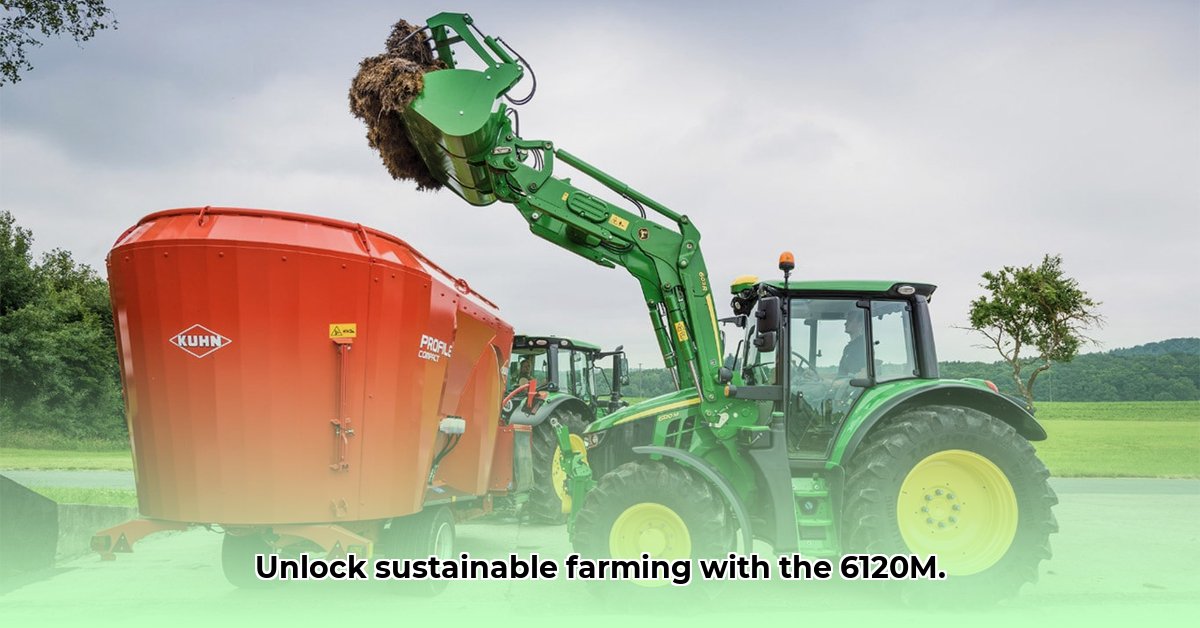
The John Deere 6120M tractor: a dependable workhorse, but how well does it align with the growing demands of sustainable agriculture? This review analyzes its capabilities, highlighting both its strengths and limitations within the context of environmentally conscious farming practices. For more information on John Deere attachments, check out this helpful resource.
Power and Versatility: A Reliable Workhorse
The 6120M boasts a 120-130 horsepower engine, providing ample power for a wide range of tasks. Its availability in 2-wheel and 4-wheel drive configurations, coupled with various power take-off (PTO) options, ensures versatility across diverse farming operations. Its robust presence in the used market suggests a history of reliable performance. However, does this translate to efficiency in modern, sustainable farming practices? The answer requires a closer examination.
Fuel Efficiency: A Critical Sustainability Factor
While powerful, the 6120M's 4.5L engine may not be the most fuel-efficient model currently available. Fuel costs significantly impact farm profitability and environmental sustainability. Precise fuel consumption data, ideally expressed as fuel used per acre worked, is crucial for assessing its environmental impact. Comparing its fuel economy to newer, more efficient models is essential for a comprehensive evaluation of its sustainability. Does the 6120M's fuel consumption align with the efficiency goals of modern sustainable farming? This is a key question.
Precision Farming: Bridging the Technology Gap
Sustainable farming increasingly relies on precision agriculture technologies, including GPS guidance, variable-rate application of inputs, and data logging. These technologies enhance resource optimization and minimize environmental impact. The 6120M's integration with such technologies requires careful consideration. While mechanically sound, its ability to seamlessly integrate with modern precision farming equipment is a factor that could significantly impact its suitability for environmentally-conscious farming. How well does the 6120M's technology integrate with the precision farming practices favored by modern sustainable agriculture? This integration is crucial for overall efficiency.
Economic Sustainability: The Long-Term Perspective
Purchasing a tractor represents a significant investment. The initial purchase price is only the beginning; ongoing expenses, including fuel, maintenance, and potential upgrades, must also be considered. A comprehensive economic analysis necessitates comparing the 6120M's total cost of ownership to its potential benefits within a sustainable farming framework. Would the long-term cost savings and increased efficiency justify the initial investment? This economic assessment is critical.
Assessing the John Deere 6120M for Sustainable Agriculture
| Feature | Strengths | Weaknesses |
|---|---|---|
| Power & Versatility | High horsepower, versatile configurations, proven reliability | Requires assessment for modern sustainable farming needs |
| Fuel Efficiency | Requires detailed comparison to newer, more efficient models | Potentially higher fuel consumption than newer models |
| Precision Farming | Level of integration with modern technologies needs review | Limited or absent integration with advanced technologies |
| Economic Sustainability | Established reputation, robust used market | Substantial upfront cost, ongoing maintenance expenses |
Actionable Steps: A Strategic Framework
This section provides actionable steps for various stakeholders involved in evaluating the John Deere 6120M for sustainable farming applications:
Short-Term Goals (Within 1 Year):
- Farmers (Small-Scale): Prioritize fuel efficiency when evaluating tractor options. Conduct a thorough cost-benefit analysis considering long-term expenses.
- Farmers (Large-Scale): Conduct a fleet-wide fuel efficiency analysis. Evaluate the economic viability of replacing older tractors with more fuel-efficient models.
- Equipment Dealers: Ensure adequate parts and service expertise for the 6120M. Promote newer, more efficient models to meet market demands.
- Policy Makers: Develop support programs incentivizing farmers to transition to more fuel-efficient equipment.
Long-Term Goals (3-5 Years and Beyond):
- Farmers (Small-Scale): Explore affordable options to integrate precision agriculture technologies gradually.
- Farmers (Large-Scale): Invest in precision agriculture solutions compatible with existing equipment, potentially requiring selective tractor replacements.
- Equipment Dealers: Expand product offerings to cater to the growing demand for sustainable agricultural technology.
- Policy Makers: Implement regulations rewarding sustainable practices while addressing potential financial burdens for farmers.
Key Takeaway: This analysis offers a framework for evaluating the John Deere 6120M's suitability for sustainable farming. However, a thorough assessment must be tailored to individual circumstances. The interplay between initial investment, operating costs, and environmental impact is multifaceted and requires careful consideration.
https://www.deere.com/en/products/equipment/tractors/